📄Supplì, trapizzino, gricia, maritozzo — what every Roman dish actually is, how the four pastas relate, and how to read the sign above the door.
ℹ️Quick Answer
Rome's street food essentials: supplì (a fried rice ball whose name comes from the French for "surprise"), trapizzino (a pizza-dough pocket invented in Testaccio in 2008), pizza al taglio sold by weight, pizza bianca, porchetta, and fiori di zucca. The four Roman pastas share one ancestor: gricia is guanciale and pecorino; add tomato for amatriciana, add egg for carbonara, drop the pork for cacio e pepe. Learn the venue names too — trattoria, osteria and enoteca mean different things.
Roman street food is not a tourist category — it's what the city eats standing up, between things, and it's cheap enough that you can work through the whole list in an afternoon. The undisputed king is the supplì, and its name is a small piece of history: it's the Italianization of the French word surprise, a relic of the era when French cooking terms filtered into Roman kitchens. It's a ball of risotto rice, usually with tomato sauce, hiding mozzarella in the middle, breaded and fried. Break one open and the cheese pulls into a long string — which is why the classic is called supplì al telefono, after the cord on an old telephone handset. There's also a supplì in bianco, made without tomato. One warning worth repeating: some are made with meat ragù rather than plain tomato, so ask if it matters to you.
The other icons are simpler. Pizza al taglio is Roman pizza by the slab, sold by weight — you point at the tray, indicate how much you want, and they cut and weigh it, which is why the price is quoted per 100 grams rather than per slice. Pizza bianca is the plainest thing in the city and one of the best: dough, olive oil, salt, nothing else. Porchetta is slow-roasted, herb-packed pork, sliced into a panino at a deli counter. Fiori di zucca are courgette flowers stuffed with mozzarella and an anchovy, battered and fried — the anchovy is standard, so ask senza alici if you don't want it. And the trapizzino is the modern one: a pocket of pizza dough filled with a classic Roman stew, invented in 2008 in Testaccio by a former flight attendant turned pizza obsessive, who named it by fusing tramezzino (sandwich) and pizza. It's less than twenty years old and already feels ancient, which tells you it got something right.
Dish
What It Is
Typical Price
🍙 Supplì
Fried risotto ball with a mozzarella center — "al telefono" for the cheese pull
~€1.50–3.50
🍕 Pizza al taglio
Roman pizza by the slab, sold by weight
~€2.50 / 100g
🤍 Pizza bianca
Dough, olive oil, salt — nothing else
~€2–4
🥪 Trapizzino
Pizza-dough pocket filled with a Roman stew — invented 2008
~€5
🐖 Porchetta panino
Slow-roasted herbed pork, sliced at a deli counter
~€5–7
🌼 Fiori di zucca
Courgette flowers with mozzarella + anchovy, fried
~€2–4 each
🌻 Carciofi alla giudia
Whole artichoke fried until it opens like a flower
Seasonal — best Feb–April
🐟 Baccalà fritto
Salt cod in batter, fried
~€4–6
🫒 Olive ascolane
Olives stuffed with meat, breaded and fried
~€1 each
🥔 Crocchette di patate
Potato croquettes — the fritti platter regular
~€1.50–2
Prices are approximate and vary by venue — the streets around the main piazzas run higher than the side streets. Some supplì are made with meat ragù rather than plain tomato; ask if it matters.
The Four Roman Pastas, and How They Relate
This is the single most useful thing you can learn about Roman food, because the four famous pastas aren't four unrelated dishes — they're one dish and its variations, and once you see the family tree you'll never confuse them again.
Start with gricia: guanciale (cured pork jowl), pecorino romano, black pepper, pasta. That's the ancestor — no tomato, no egg, no cream, ever. Now add tomato and you have amatriciana. Go back to gricia and add egg instead, and you have carbonara. Go back once more and take the pork out, leaving just cheese and pepper, and you have cacio e pepe. Four dishes, one skeleton, three moves.
Two things follow from that. First, none of them contains cream — that's a foreign addition, and a good guide will be emphatic about it. Second, and worth knowing if you're vegetarian: cacio e pepe is not a vegetarian dish, because pecorino romano is made with animal rennet. It's the most common misunderstanding in Roman food, and it catches people who've been ordering it for years.
Sweets, Gelato, and the Fake-Gelato Test
The Roman sweet worth crossing town for is the maritozzo: a soft sweet bun, split and packed with an improbable quantity of whipped cream, eaten at breakfast with a coffee. It's a proper Roman institution rather than a modern invention, and it's one of the few things in this glossary that's better before noon than after dinner.
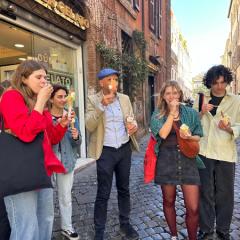
Gelato is the closer on almost every food tour, and most of them teach a version of the same lesson, because it's genuinely useful: not all gelato is gelato. The industrial stuff is made from powders and pastes and betrays itself by looking too good — fluorescent colors, mounds piled high above the tub in stiff peaks, banana that's yellow rather than grey. Real gelato is stored flat or in covered tins, its colors are muted, and the pistachio is a dull khaki because pistachios are a dull khaki. If you learn one thing on a food tour that pays off for the rest of your trip, it's this one.
The trade-off: Chasing the perfect gelateria takes you off the main streets and away from the tub of neon-blue "puffo" flavor your kids will absolutely want. But the difference between real and industrial gelato is not subtle once you've had both — and the test takes three seconds through the window.
What to Drink
The house wine of Rome is Frascati, a white from the hills just southeast of the city, and the local unit is the quartino — a quarter-liter carafe, the right amount for one person with lunch, usually around €4. Beyond it, the region's wines are worth knowing by name: Cesanese, Lazio's serious red; Malvasia and Cacchione, local whites; and from further afield but common on tour lists, Morellino di Scansano from Tuscany.
Before dinner you'll be offered an aperitivo — a spritz or a negroni with something to pick at, taken between about six and eight, which is a genuine institution rather than a tourist ritual. Afterward comes the digestivo, often limoncello or an amaro. And the most useful drinking word in Rome has nothing to do with alcohol: al banco, meaning "at the counter." Coffee drunk standing at the bar costs a fraction of the same coffee brought to a table, because table service is a separate, legally priced product. Romans drink their espresso in ninety seconds, standing, and so should you.
Reading the Sign Above the Door
Nobody explains this, and it's the most practical section here: the word on the sign tells you what kind of place you're walking into. A trattoria is the Roman default — casual, family-run, simple regional food at fair prices, a little more structured than an osteria and a lot less formal than a restaurant; in the evening in a city, book ahead. An osteria was historically a place people went to drink the owner's wine, sometimes bringing their own food, at shared tables; today it means a short rotating menu of affordable local dishes and a good wine list, usually more rustic than a trattoria. A ristorante is the formal end: bigger menu, higher prices, table service you're paying for.
Then the specialists. An enoteca is wine-led — a wine bar or shop that serves food to match the bottles rather than the reverse, and it's where most food tours start. A friggitoria fries: historically fish for fishermen, now everything crisp, and it's where you'll find good supplì. A tavola calda — literally "hot table" — serves hot, pre-made dishes cafeteria-style, and it's how Roman office workers eat lunch cheaply. A forno or panificio is a bakery, and in Rome that's where pizza al taglio and supplì live. Add pizzeria, gelateria, pasticceria (pastry) and bar (which in Italy means coffee, not cocktails — it's where you have breakfast) and you can read almost any street in Trastevere.
One honest caveat: these distinctions have blurred considerably, and the names are now partly marketing. Plenty of expensive restaurants call themselves osteria or trattoria to borrow the warmth of the word — one of Italy's most celebrated fine-dining rooms is called an osteria and is nothing of the sort. Read the sign as a strong hint, not a guarantee, and check the prices.
Sign
What to Expect
Trattoria
The Roman default — casual, family-run, simple regional food, fair prices. Book ahead in the evening.
Osteria
Historically a wine room with shared tables; today a short rotating menu, affordable, rustic, good wine.
Ristorante
The formal end — bigger menu, higher prices, full table service.
Enoteca
Wine-led. Food chosen to match the bottles. Where most food tours start.
Friggitoria
Fried things. Historically fish; now the place for good supplì.
Bakery — and in Rome, where pizza al taglio and supplì live.
Bar
Coffee, not cocktails. Where Romans have breakfast standing up.
Pasticceria
Pastry shop — the maritozzo's natural home.
The distinctions have blurred and the names are partly marketing now — some expensive restaurants call themselves osterie for the warmth of the word. Read the sign as a hint, then check the prices.
Words That Save You Money or Trouble
A short list, all of it practical. Coperto is the per-person cover charge added at sit-down restaurants — it's normal, it's legal, and it's printed on the menu, so read it before you sit rather than arguing about it afterward. Un etto is 100 grams, the working unit at any deli or bakery counter — pizza al taglio and cured meats are sold this way, and it's why you can't buy a taste of five things without ending up with half a kilo.
The rest are requests. Senza alici — without anchovy — unlocks fiori di zucca and puntarelle for vegetarians. Senza glutine is gluten-free; sono celiaco ("I'm celiac") triggers a genuinely serious protocol in Italian kitchens, which take the condition more seriously than almost anywhere. Caglio vegetale is vegetable rennet, worth knowing if you're a strict vegetarian hunting for cheese you can actually eat. And acqua del rubinetto is tap water — free, perfectly good, and something you have to ask for by name.
Word
What It Means
Why It Matters
Coperto
Per-person cover charge
Normal and legal — it's printed on the menu
Un etto
100 grams
The working unit at every deli and bakery counter
Al banco
At the counter
Coffee standing costs a fraction of coffee seated
Quartino
Quarter-liter carafe of wine
The right amount for one, around €4
Senza alici
Without anchovy
Unlocks fiori di zucca and puntarelle for vegetarians
Senza glutine
Gluten-free
Widely understood — Italy takes this seriously
Sono celiaco
I'm celiac
Triggers a real protocol in Italian kitchens
Caglio vegetale
Vegetable rennet
Most Italian cheese uses animal rennet
Acqua del rubinetto
Tap water
Free and fine — but you have to ask
The trade-off: Memorizing a dozen Italian words is more effort than pointing, and pointing genuinely works in Trastevere. But every word on this list either saves you money, prevents a misunderstanding, or gets you something you couldn't otherwise order — which is a good return on ten minutes.
Dish descriptions, prices, and seasonal availability reflect current 2026 information and vary by venue, season, and preparation — all prices are approximate. Some dishes contain animal products that aren't obvious: supplì may contain meat ragù, fiori di zucca and puntarelle contain anchovy as standard, and pecorino romano is made with animal rennet, so cacio e pepe is not vegetarian. Carciofi alla giudia is seasonal, at its best roughly February to April. Venue-type distinctions have blurred and are not a guarantee of price or style. Always confirm ingredients if you have dietary restrictions.
Common questions
❓ What is Roman street food?
The essentials are supplì (a fried risotto ball with a mozzarella center, whose name comes from the French "surprise"), pizza al taglio (Roman pizza sold by weight, not by slice), pizza bianca (dough, oil and salt — nothing else), porchetta (slow-roasted herbed pork in a panino), fiori di zucca (fried courgette flowers stuffed with mozzarella and an anchovy), and the trapizzino, a pizza-dough pocket filled with classic Roman stews, invented in Testaccio in 2008. Most cost between €1.50 and €7. Around the Jewish Ghetto you'll also find carciofi alla giudia and fried baccalà.
❓ What's the difference between carbonara, amatriciana, gricia and cacio e pepe?
They're variations on one dish. Gricia is the ancestor: guanciale (cured pork jowl), pecorino romano and black pepper. Add tomato and it becomes amatriciana. Add egg instead and it becomes carbonara. Remove the pork, leaving cheese and pepper, and it becomes cacio e pepe. None of them contains cream — that's a foreign addition, not a Roman one. One catch for vegetarians: cacio e pepe isn't vegetarian, because pecorino romano is made with animal rennet.
❓ What's the difference between a trattoria, an osteria and an enoteca?
A trattoria is the Roman default: casual, family-run, simple regional food at fair prices — book ahead in the evening. An osteria was historically a place to drink the owner's wine at shared tables; today it means a short rotating menu of affordable local dishes with a good wine list, usually more rustic than a trattoria. An enoteca is wine-led — a wine bar serving food to match the bottles, which is where most food tours begin. A ristorante is the formal end. Be aware the lines have blurred and the names are partly marketing now: some expensive restaurants call themselves osterie for the warmth of the word.
About the Author
Mario Dalo
Founder & Research Analyst
I founded TrastevereFoodTour to apply the method we use across the Intercoper portfolio: read what thousands of travelers actually reported, verify what can be verified, and publish what the evidence supports — including the parts that don't help a booking.